 🎧
🎧
Science
Astrophysics for People in a Hurry
0 reviews
View →

Affiliate link — we may earn a commission at no extra cost to you.
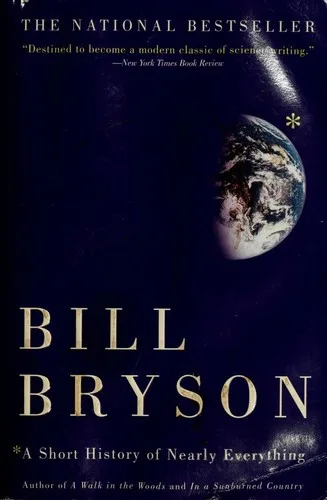
A travel writer decides to explain all of science — the universe, the atom, the cell, the dinosaurs, us — and somehow produces one of the most beloved popular science books ever written. Two decades on, the audiobook remains a benchmark for making eighteen hours of science feel like good company.
The book's genius is that Bryson writes as a fellow amateur rather than an expert: he is discovering this alongside you, and his delight is contagious. Every chapter pairs the science with the gloriously human stories of the scientists — the feuds, the frauds, the overlooked assistants, the reverend who ate his way through the animal kingdom. You learn how much we know, and — Bryson's quiet running theme — how recently, how accidentally, and how incompletely we came to know it. Some details have aged (the book predates Pluto's demotion and much genomic science), but the framework and the storytelling have not.
Matthews reads with a warm, wry British delivery that fits Bryson's voice so naturally that many listeners assume it is the author. His comic timing on Bryson's punchlines — and this book has genuine punchlines — is excellent, and he handles the scientific vocabulary across geology, chemistry, and cosmology without a stumble. Across eighteen hours his energy never dips, which is the difference between a pleasant listen and an abandoned one.
This is close to an ideal audio book: story-driven, chapter-episodic, and blessedly free of diagrams you would miss. The chapters stand alone well enough for interrupted listening, making it superb commute material over several weeks. The occasional density spike (particle physics, taxonomy) passes quickly and never assumes prior knowledge.
The scientifically curious who found textbooks lifeless, teenagers and adults alike (it is clean and frequently assigned in schools), and anyone who enjoyed Astrophysics for People in a Hurry and wants the same wonder at ten times the depth. Specialists will find their own field simplified — that is the price of covering everything.
If Brysons wide-angle wonder leaves you wanting the cosmic chapters at greater depth, Astrophysics for People in a Hurry makes a perfect short chaser — and if the human-history chapters gripped you most, Sapiens picks up precisely where Brysons story of our species leaves off.
Well narrated? Delightfully — Matthews and Bryson are one of the great author-narrator voice matches in non-fiction, even though they are different people. Eighteen hours that feel like eight. One of the easiest long-audiobook recommendations we can make.
Every listener leaves with different favourites, but three stretches consistently stand out. The early cosmology chapters turn the scale of the universe into something you feel rather than memorise — Bryson's gift for analogy peaks here. The geology and Yellowstone chapters transform the ground under your feet into a slow-motion thriller, and his account of how often science advanced through amateurs, accidents, and overlooked assistants quietly dismantles the lone-genius myth better than any dedicated book on the subject. And the closing chapters on extinction and human fragility land with unexpected emotional force for a book this funny. It is the rare survey where the connective tissue — how we know, who found out, what it cost them — is as memorable as the facts themselves, and Matthews's narration gives each discovery story the pacing of an anecdote told well at dinner.
Some details have aged — it predates Pluto's demotion and most modern genomics — but the storytelling, the history of how we came to know things, and the wonder have not dated at all. Treat the occasional stale fact as a period detail, not a dealbreaker.
Very much so — it is clean, frequently assigned in schools, and one of the most common science books shared across generations. Curious listeners from their early teens upward tend to love it.
No, Richard Matthews narrates this edition, though the voice-match to Bryson's wry, warm style is so natural that many listeners assume otherwise. His stamina across eighteen hours is a quiet masterclass.
If this sounds like your next listen, you can hear A Short History of Nearly Everything free with an Audible trial — new members get their first title included. (Affiliate link — we may earn a commission at no extra cost to you.)
No approved reviews yet. Be the first to write one.