 🎧
🎧
Science
A Short History of Nearly Everything
0 reviews
View →

Affiliate link — we may earn a commission at no extra cost to you.
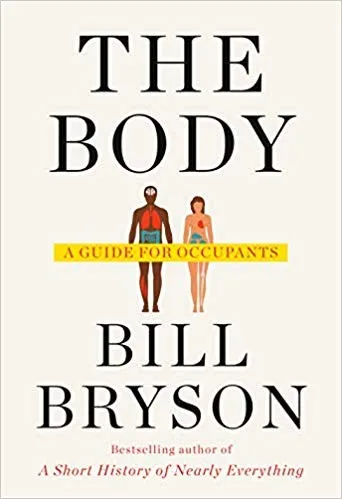
If you listened to A Short History of Nearly Everything and wished Bryson would turn the same curiosity on the thing you are actually living inside, The Body is that book, and once again he narrates it himself. Fourteen hours of head-to-toe touring through human anatomy, physiology, medical history, and the sheer statistical improbability of you being alive to hear it, delivered in the warm, faintly incredulous voice that has become one of nonfiction audio's most reliable pleasures.
Everything, more or less. Bryson works his way through the body system by system, skin, brain, heart, blood, bones, guts, immune system, but the structure is really just an excuse for his real specialty: the astonishing fact delivered with perfect timing. Your body made a million red blood cells in the time it took to read that clause. The medical-history digressions are the book's secret weapon, the doctors who experimented on themselves, the discoveries made by accident, the treatments that were catastrophically wrong for centuries. It is popular science that never forgets to be entertaining, and it makes you newly aware of the machine you spend your whole life ignoring.
Bryson is not a trained actor and does not try to be; his narration works because his authorial voice and his speaking voice are the same instrument. The wonder is genuine, the comic timing is his own, and the slight sense of a man delighted and appalled in equal measure by what he is discovering is exactly the right register for the material. This is the same reason his Short History works so well in audio: nobody else can deliver a Bryson aside the way Bryson does. At fourteen hours it never drags, because the density of interesting facts means you are never more than a minute from something worth repeating to whoever is nearby.
The system-by-system structure means the book has no narrative arc, it is a tour, not a story, so it is better suited to listening in chapter-sized pieces than in long binges. And a little of the medical-horror material (the history of surgery before anesthesia, particularly) is not for the squeamish, though Bryson handles it with more wit than gore.
Well narrated? Yes, Bryson reading Bryson is the intended and ideal experience. The most entertaining possible tour of the thing you live inside, and a natural next listen for anyone who loved his Short History of Nearly Everything.
A Short History of Nearly Everything, the obvious companion, Bryson turning the same curiosity on the universe rather than the body.
Yes, Bryson narrates the unabridged Random House Audio edition, just as he did with A Short History of Nearly Everything. His own voice, warm and full of genuine wonder, is a large part of why his science books work so well in audio.
Most listeners rate them very closely. A Short History is broader in scope (all of science); The Body is more focused and, for many, more immediately gripping because the subject is literally you. If you loved one, you will almost certainly enjoy the other.
For enjoyment, absolutely. For retention, the fact-density is so high that no one remembers it all, and that is fine, the pleasure is in the tour. Listeners who want to retain specifics often keep the book handy as a reference afterward.
About 14 hours 2 minutes, best taken in chapter-sized sessions since it is a system-by-system tour rather than a continuous narrative.
You can hear The Body free with an Audible trial. (Affiliate link, we may earn a commission at no extra cost to you.)
No approved reviews yet. Be the first to write one.