 🎧
🎧
Fiction
To Kill a Mockingbird
1 reviews
View →

Affiliate link — we may earn a commission at no extra cost to you.
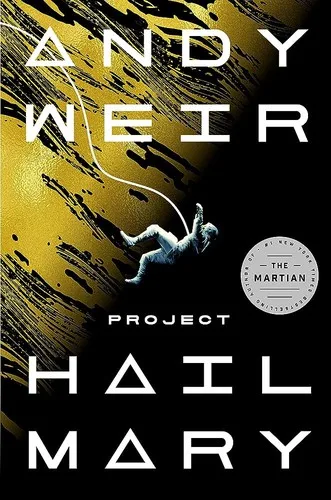
Before Project Hail Mary became the audiobook everyone recommends, this was the recording that built Andy Weir's audio reputation — and for a generation of listeners, R. C. Bray's performance is still the definitive Mark Watney. Here is how it holds up, and which Weir audiobook to reach for first.
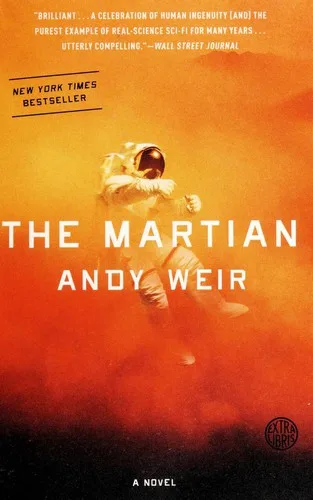
An astronaut is presumed dead and left behind on Mars. He is not dead. What follows is five hundred sols of problem-solving with duct tape, disco music, and potatoes — a survival story where the tension comes not from villains but from arithmetic: oxygen, water, calories, time. Weir writes science the way sports writers cover games, and the book's great trick is making botany and orbital mechanics feel like edge-of-seat drama.
Bray won an Audie for this performance and earned it. His Watney is dry, sardonic, and deeply likeable — the wisecracking log entries land because Bray reads them like a man keeping himself sane rather than performing for an audience, which is precisely the point of the character. His mission-control voices are distinct without straying into impressions, and his pacing through the technical passages keeps the maths from ever feeling like homework. A note for completists: a later edition was re-recorded with Wil Wheaton due to rights changes, but the Bray recording is the one the audiobook community means when they call The Martian a classic of the format.
The fair question for anyone with one credit. Project Hail Mary has the more ambitious story and the more elaborate audio production; The Martian is leaner, funnier line-for-line, and arguably the purer version of Weir's problem-solving formula. Our take: start with Project Hail Mary for the bigger experience, come back to The Martian when you want more — or reverse the order if you prefer your stakes grounded and your science strictly real-world.
Fans of competence-porn survival stories, listeners who bounced off "serious" science fiction, and anyone who wants humour with their peril. The profanity is frequent (the first line is famous for it), so it is not one for family car rides.
The obvious answer is Project Hail Mary — same author, same problem-solving DNA, more ambitious canvas, and the single most recommended audio production in modern science fiction. Between the two of them, Weir has a strong claim to being the most audio-friendly novelist working.
Well narrated? A landmark performance — Bray's Watney remains one of the great character narrations in the format's history. A decade on, this is still one of the safest credits in science fiction.
Bray's recording has an origin story worth knowing: it was produced by a then-small publisher for a self-published novel nobody expected to explode, and Bray treated a stranded-astronaut log-entry format — which could easily have been monotonous — as a one-man character study. His Watney is sarcastic without being smug, competent without being flat, and genuinely funny in the way the character was written to be. When the novel became a phenomenon, the audiobook rode with it, and Bray's career changed on the strength of this single performance. Listeners consistently rank it among the greatest fiction narrations ever recorded, and the log-entry structure turns out to be a stealth advantage in audio: every entry is a natural episode, making this one of the most commute-friendly novels we have ever reviewed.
Two recordings exist, and the R.C. Bray edition reviewed here is the one with the devoted following — his deadpan Watney is widely considered the character's definitive voice. If you have a choice, the Bray recording is the one to seek out.
Yes — it is one of the most common gateway titles into the genre. The science is real-world problem solving rather than space opera, and the humour does most of the carrying. If numbers-heavy passages bore you, they pass quickly.
Yes — the famous opening line sets the tone, and Watney swears the way a stranded astronaut plausibly would. It is played for comedy rather than aggression, but this is not a family-speaker listen.
If this sounds like your next listen, you can hear The Martian free with an Audible trial — new members get their first title included. (Affiliate link — we may earn a commission at no extra cost to you.)
No approved reviews yet. Be the first to write one.