 🎧
🎧
Romance
One Dark Window
0 reviews
View →

Affiliate link — we may earn a commission at no extra cost to you.
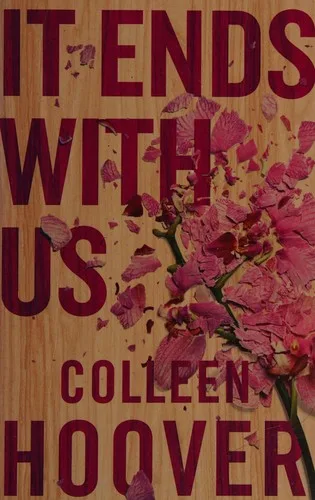
The book that made Colleen Hoover a publishing phenomenon is routinely shelved as romance, and that label is the single most important thing to correct before you press play: It Ends with Us uses the machinery of a love story to walk you, by degrees, into a portrait of domestic abuse from the inside, and its power depends on you falling for Ryle exactly as Lily does. Olivia Song's tender, intimate narration is a large part of why the trap closes so effectively.
Lily Bloom has built the life she promised herself, out of the small town, out of her parents' violent marriage, into her own Boston flower shop. Then Ryle Kincaid: a gorgeous neurosurgeon, magnetic, devoted, and, in increments the book meters with terrible precision, familiar in a way Lily cannot at first admit. Interleaved are her teenage journal entries, addressed to Ellen DeGeneres, about Atlas, her first love, whose return forces the reckoning. Hoover based the story on her own mother's experience, and the book's enduring achievement is making the reader feel the exact gravity that holds someone inside a cycle they can see perfectly well from outside. The title is a promise, and how Lily gets there is the point.
Song reads Lily with a warmth and youth that makes the early romance genuinely swoony, which is precisely the job, the listener must be as disarmed as Lily is for the later chapters to land with their full weight. Her handling of the journal sections gives teenage Lily a distinct, younger register, and her restraint in the hardest scenes keeps them devastating without tipping into melodrama. This is a book about ambivalence, and Song's performance holds both truths in the air at once.
Well narrated? Song's disarming warmth is exactly the instrument the story requires. Not the escapist romance its cover suggests, a serious book about the anatomy of abuse, with a content warning to match, and one of the defining audio phenomena of its decade.
Verity, Hoover's dark thriller swerve, to hear the same author operating a completely different machine.
It uses romance structure, but its core subject is domestic abuse and breaking generational cycles, and it should be approached with that content warning in mind. Readers expecting light escapism are the ones most often blindsided.
Olivia Song narrates the Simon & Schuster Audio edition, and her intimate, emotionally calibrated performance is widely praised for carrying both the swoon and the devastation the story requires.
Yes, the sequel picks up directly from this book's epilogue and depends entirely on its events. Start here.
The film adapts this novel with compressions and tonal shifts; the book's journal structure and interiority, especially Lily's reasoning inside the relationship, are what the audio preserves best.
You can hear It Ends with Us free with an Audible trial, new members get their first title included. (Affiliate link, we may earn a commission at no extra cost to you.)
No approved reviews yet. Be the first to write one.