 🎧
🎧
Psychology
Man's Search for Meaning
3 reviews
View →

Affiliate link — we may earn a commission at no extra cost to you.
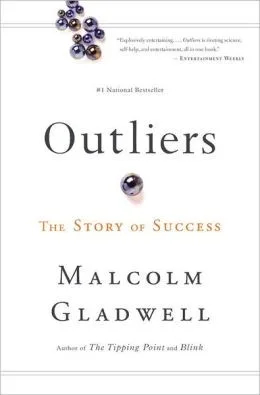
Before he built an audio empire with a podcast, Malcolm Gladwell was already demonstrating the thesis in his own audiobooks: delivery is destiny. Outliers, self-narrated in his precise, faintly conspiratorial cadence, is the book that put "the 10,000-hour rule" into the language — and the audio edition remains the most persuasive way to encounter an argument that is, at its core, about the hidden machinery behind success stories.
We tell success as a story of individual merit; Gladwell retells it as a story of hidden advantages. Canadian hockey stars are disproportionately born in January because of youth-league age cutoffs. Bill Gates got thousands of hours on a computer terminal in 1968 that almost no teenager on Earth had access to. The Beatles played Hamburg clubs eight hours a night before anyone knew their names. Cultural legacy shapes plane crashes and math scores alike. The chapters accumulate into one repeated question — what is this person's hidden head start? — that permanently changes how you hear success stories, including your own.
He is one of the rare authors who narrates better than most professionals could narrate him. The Gladwell cadence — the setup, the pause, the reveal delivered like a secret — is a performance style honed for exactly this kind of counterintuitive storytelling, and it makes seven hours feel like a long, excellent dinner conversation. His narration is also disarming in a useful way: where the argument stretches thin, the charm carries it, which a reviewer should note is both the recording's strength and its rhetorical trick.
The 10,000-hour figure has been heavily qualified by later research — deliberate practice matters, the round number does not — and critics fairly note that Gladwell's case studies are selected, not sampled. Listen to it as a brilliant reframing device rather than settled science and it holds up; listen to it as law and it will eventually let you down. Pair it with Thinking, Fast and Slow for the rigor, and Atomic Habits for what to actually do with your hours.
Well narrated? Definitively — Gladwell reading Gladwell is the intended experience. A hugely entertaining argument to hear, best consumed with one skeptical eyebrow raised.
Thinking, Fast and Slow — the careful science behind the stylish stories.
Yes — he narrates all his books, and his distinctive delivery is a large part of why his audio editions consistently outperform expectations. Many listeners consider his titles audio-first books.
As a memorable shorthand for "mastery takes enormous deliberate practice," broadly yes; as a precise scientific threshold, no — later research and even the original researchers have pushed back on the round number. The book's deeper argument about hidden advantage survives the correction.
Outliers is the consensus starting point — the most cohesive thesis and the most quotable chapters. If its style clicks, his other titles offer more of the same cadence.
You can hear Outliers free with an Audible trial. (Affiliate link — we may earn a commission at no extra cost to you.)
No approved reviews yet. Be the first to write one.