 🎧
🎧
Memoir
Becoming
0 reviews
View →

Affiliate link — we may earn a commission at no extra cost to you.
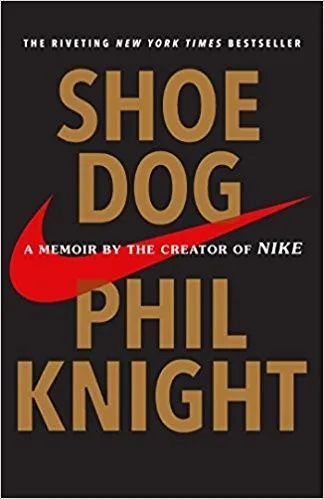
Phil Knight spent decades saying almost nothing publicly about how Nike was built. Shoe Dog is the record that broke that silence, and Norbert Leo Butz's narration is the reason we would choose audio over print for a first encounter with it. What reads on the page as vivid memoir transforms in Butz's hands into something closer to spoken confession: a man reconstructing, with obvious pleasure, the chaos that somehow became one of the world's most recognizable brands.
Knight's account is startlingly honest about how close Nike came to dying at every stage. The book's central tension, a company perpetually on the edge of bankruptcy while somehow continuing to grow, never lets up across thirteen hours. The first Japanese sourcing trip, the agonizing bank negotiations, Bill Bowerman's legendary waffle-iron experiment, the bitter legal battles, the employee culture Knight built almost by accident: each chapter is a crisis with its own texture, and the overall shape of the story only emerges in retrospect. This is not a founder's victory lap. It is a memoir of a man who was genuinely terrified most of the time and kept going anyway.
Butz is a Tony Award-winning stage actor, and it shows in how he manages the book's wide emotional range. His Knight is warm and self-deprecating in the early chapters, and the voice acquires a quiet gravity as the stakes escalate. His differentiation of the supporting cast, the irascible Bowerman, Knight's wife Penny, the misfits of the early sales team, never tips into caricature; he trusts the characterisation on the page and adds texture rather than replacing it. The thirteen-hour runtime is not felt, which is the highest compliment you can pay a narrator on a book this long.
The book ends in 1980, at the Nike IPO. Listeners wanting the later decades, the Air Jordan era, the labour controversies, the global expansion, will not find them here. Knight made a deliberate structural choice, and the memoir is stronger for the clean ending, but first-time readers should know what the scope is. The book also touches on Knight's complicated personal life in ways that are candid without being comfortable, and his ambivalence about what was sacrificed is one of the most honest things about it.
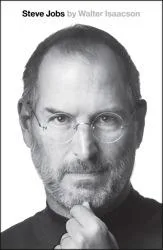
We get asked this a lot. They are meaningfully different books. Steve Jobs is a biography, authorised but not controlled, and Isaacson's judgment is present throughout. Shoe Dog is a memoir, Knight writing his own story, which means the blind spots are his own. Shoe Dog is the better listen in audio, in our view, because Butz's performance is warmer than Dylan Baker's technically excellent but cooler reading of Jobs. If you only have a credit for one founder memoir, we would give it to Shoe Dog, then read Steve Jobs in print for the analysis Butz cannot supply.
Well narrated? Definitively, Butz gives Knight's voice a warmth the page only implies. The definitive listen for anyone interested in what it actually costs to build something: not the mythology, but the sleepless, near-bankrupt, exhilarating reality.
Steve Jobs for the biography angle on American invention, or Outliers for the hidden-advantage framework that illuminates Knight's early Japan trip differently.
In our experience, yes, and the audio edition specifically is the best format for a first encounter with the book. Butz's narration gives Knight's voice a warmth and self-deprecation that reads slightly flatter on the page. The thirteen-hour runtime disappears in a week of commutes.
Norbert Leo Butz narrates the unabridged Simon & Schuster Audio edition, a Tony Award-winning actor whose performance is widely considered the definitive reading of Knight's memoir.
They are different books, one is a memoir, one a biography, and both are excellent. As a pure listening experience, Shoe Dog is warmer; as an analytical portrait, Steve Jobs is more rigorous. If you can only do one in audio, Shoe Dog wins.
13 hours and 21 minutes unabridged, long, but one of the most propulsive long listens in the memoir category. Almost no one reports it feeling long.
No, the memoir ends deliberately in 1980, at the Nike IPO. The Air Jordan, the 'Just Do It' era, and Nike's global expansion are not covered. This is a structural choice, not an omission.
You can hear Shoe Dog free with an Audible trial, new members get their first title included. (Affiliate link, we may earn a commission at no extra cost to you.)
No approved reviews yet. Be the first to write one.