 🎧
🎧
Self-Help
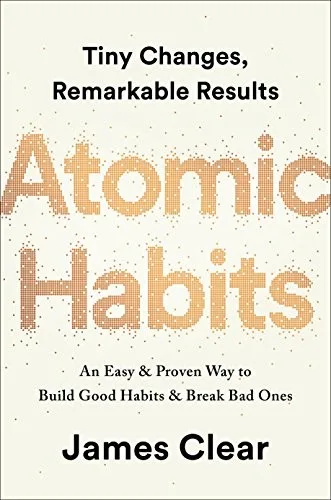
Atomic Habits
4 reviews
View →

Affiliate link — we may earn a commission at no extra cost to you.
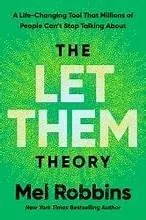
The biggest self-help phenomenon of the mid-2020s is built on two words, and the audiobook is narrated by the person who turned those two words into a movement. That combination — a simple idea and its most passionate advocate behind the microphone — makes this one of the more interesting author-narrated titles on our shelf, for reasons both good and worth flagging.
Let them. Someone excludes you from plans? Let them. A colleague underestimates you? Let them. Robbins's theory is that an enormous share of daily misery comes from trying to control other people's opinions, moods, and choices — and that releasing that control (Let Them) must be paired with reclaiming your own response (Let Me). It is, as Robbins herself acknowledges, ancient wisdom — Stoicism and radical acceptance in a phrase short enough to say mid-argument. The book's contribution is packaging: applying the frame chapter by chapter to friendship, romance, family opinions, workplace stress, and comparison in the social media age.
This is where the audiobook earns a specific recommendation. Robbins built her career as a speaker and podcaster, and it shows: her delivery is direct, energetic, and conversational to the point that the book frequently feels like a very long, very focused voice memo from a friend who refuses to let you off the hook. She departs from the printed text in small, unscripted-feeling moments, and her own stories — including the frustrating moments that birthed the theory — carry an authenticity a hired narrator could not manufacture. If you have enjoyed her podcast, this is that, concentrated.
Two flags. First, repetition: the core idea is genuinely simple, and stretched across six hours it circles back on itself often — listeners who grasp concepts quickly may find the later chapters reinforcing rather than revealing. Second, boundary cases: "let them" is liberating for other people's opinions, but the book is lighter than it should be on situations that require confrontation rather than release. Take the tool; do not mistake it for the whole toolbox.
Chronic people-pleasers, anyone drained by family opinion or workplace politics, and listeners who want their self-help delivered with podcast energy rather than professorial calm. Skip if repetitive reinforcement frustrates you — or treat it at 1.5x as a long pep talk, which is arguably its ideal form.
Let Them is the release; the deeper philosophical foundation it stands on is in Mans Search for Meaning, where the freedom to choose your response was articulated under circumstances that make every modern application feel possible. Robbins gives you the phrase for daily life; Frankl gives you the proof it holds under anything.
Well narrated? Yes, in the specific way only author-narrators can achieve: total conviction. The idea is simpler than the page count and better than the skeptics allow. As a listen, it does exactly what it promises — and the phrase will lodge in your head, which is rather the point.
Having applied the frame for a while before writing this review, our field notes: the theory is at its strongest in low-stakes, high-friction situations — family commentary, social exclusion, other people's driving, colleagues' moods — where the misery genuinely does come from trying to control the uncontrollable. It is weakest where the book is thinnest: situations that require confrontation, negotiation, or protecting someone, where "let them" can slide into avoidance dressed as peace. Robbins does address the distinction through the "Let Me" half of the theory, but listeners tend to remember the release and forget the reclaim — so if you take one implementation note from us, it is to treat the two halves as inseparable. Used that way, the phrase earns its popularity; used as release alone, it becomes a politer word for giving up.
The core idea is genuinely simple, and yes, the later chapters reinforce more than they reveal — we flag that honestly. The value is in the applications: friendship, family opinion, workplace stress, and comparison each get their own treatment, and the repetition is arguably the point for habit formation.
Yes — and it is the main reason to choose audio. Her podcast-honed, direct delivery, complete with unscripted-feeling asides, carries a conviction no hired narrator could manufacture. If you enjoy her show, this is that energy, concentrated.
Just over six hours. Listeners who find motivational reinforcement repetitive report that 1.25x–1.5x turns it into an ideal extended pep talk without losing Robbins's punch.
If this sounds like your next listen, you can hear The Let Them Theory free with an Audible trial — new members get their first title included. (Affiliate link — we may earn a commission at no extra cost to you.)
Her personal stories hit hard. The theory is simple, but the applications are eye-opening. Repetitive? A bit, but it's reinforcing the habit. Loved it.
Stoicism meets podcast energy. Mel Robbins makes letting go feel achievable. The "Let Me" half is just as important. A great listen for overthinkers.
Two words that changed my daily stress
Let Them/Let Me" frame is simple but powerful. Perfect for people-pleasers.