 🎧
🎧
Self-Help
The Let Them Theory
4 reviews
View →

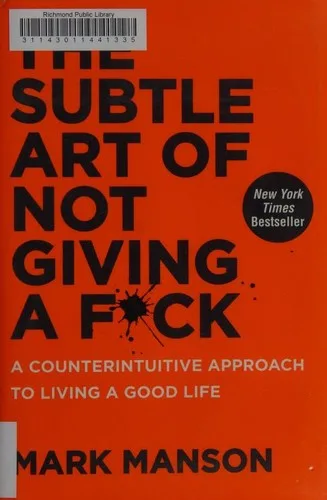
Affiliate link — we may earn a commission at no extra cost to you.
A self-help book that opens by telling you self-help is mostly nonsense has a narrow path to walk, and the audiobook has an even narrower one: get the tone wrong and five hours of contrarian advice becomes five hours of someone shouting at you. This recording gets the tone right, and that is most of the review.
Strip away the profanity and Manson's thesis is old, sturdy philosophy: you have a finite number of things you can genuinely care about, so choose them deliberately and let the rest go. The book attacks the "positivity at all costs" strain of self-help, argues that problems never disappear but merely upgrade, and lands on the uncomfortable idea that you are always choosing your struggles whether you admit it or not. It is closer to Stoicism in a leather jacket than to the shock-value manifesto the cover suggests.
Wayne is the reason this audiobook works. His delivery is dry, faintly amused, and perfectly matched to Manson's bar-stool-philosopher voice — he reads the profanity like punctuation rather than punchlines, which keeps the book from tipping into shock-jock territory. His pacing is brisk without rushing, and he lands Manson's frequent self-deprecating asides with the timing of someone who actually finds them funny. It is one of those pairings where you cannot imagine another voice reading the book.
The honest criticisms: the middle chapters repeat the central idea more than they develop it, and some of the anecdotes (a dead guitarist's brother, a Japanese soldier who would not surrender) run longer than their payoff justifies. In audio these stretches are more noticeable because you cannot skim. The profanity, obviously, is constant — if that grates in print, it grates more when spoken aloud on your commute.
Listeners burned out on relentlessly upbeat self-help, twenty-and-thirty-somethings navigating quarter-life recalibration, and anyone who wants philosophy delivered without a lecture podium. Skip it if profanity ruins a listen for you, or if you want structured, actionable frameworks — this is a values book, not a systems book. For systems, pair it with Atomic Habits.
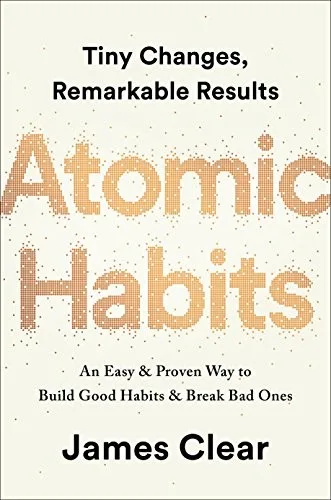
Manson tells you what to care about; he deliberately does not tell you how to build the habits around it. For the systems half of the equation, Atomic Habits is the natural companion — the two books cover opposite halves of the same problem, and many listeners report they land best in that order.
Well narrated? Excellently — Roger Wayne's dry delivery is the definitive version of Manson's voice. The book itself is smarter than its marketing and lazier than its best chapters, but as a five-hour listen it earns its place: short, funny, and genuinely clarifying about what deserves your attention.
A decade after publication, this book sits at the head of an entire "honest self-help" lineage it effectively created — the wave of profanity-titled, anti-positivity paperbacks that followed are mostly diminishing echoes. What the imitators copied was the tone; what they usually missed was the structure underneath it. Manson's chapters build a genuine argument about values in sequence, where most successors deliver disconnected rants. In audio terms, the comparison is even more lopsided: Roger Wayne's performance set a bar for deadpan delivery that the imitators' narrators audibly strain to reach. If you are choosing one book from this corner of the shelf, this is the original for a reason — and if you have already listened to it, the sequel covers hope and meaning with the same voice but a noticeably more philosophical, less punchy register.
No — the profanity starts with the title and never lets up, so treat this strictly as a headphones listen. If strong language is a dealbreaker for you entirely, the ideas here overlap heavily with Stoic philosophy titles that cover similar ground in cleaner terms.
No — it is narrated by Roger Wayne, though the voice-match is so convincing that many listeners assume it is the author. Wayne's dry, faintly amused delivery is widely considered one of the best author-voice pairings in the self-help genre.
At around 5 hours 17 minutes it is one of the shortest titles on our Self-Help shelf, and the conversational style makes it one of the easiest entry points into the genre — provided the language does not bother you.
If this sounds like your next listen, you can hear The Subtle Art of Not Giving a F*ck free with an Audible trial — new members get their first title included. (Affiliate link — we may earn a commission at no extra cost to you.)
No approved reviews yet. Be the first to write one.