 🎧
🎧
Fiction
To Kill a Mockingbird
1 reviews
View →

Affiliate link — we may earn a commission at no extra cost to you.
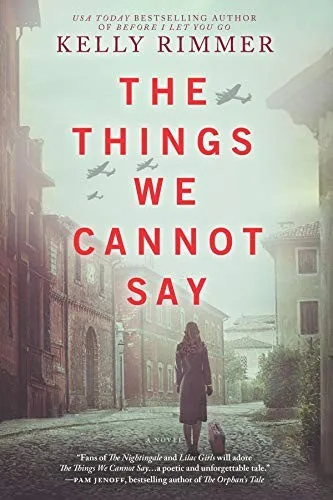
In 1942, in a refugee camp on the edge of a war that has swallowed everything, a young woman speaks her wedding vows. The vows are a lie, and the lie will stay buried for the rest of the century. That is the seed from which The Things We Cannot Say grows, and if you have ever loved a book like The Nightingale or All the Light We Cannot See, I suspect you are already reaching for your headphones. Over a million readers have made this one of the quiet giants of WWII fiction, and I understand the devotion completely.
Kelly Rimmer tells two stories at once, and the pleasure is in watching them reach for each other across seventy years. In Nazi-occupied Poland, Alina Dziak is fifteen and engaged to Tomasz, the boy she has loved since childhood, when the occupation begins its slow, brutal dismantling of her village, her family, and the future she assumed was hers. In the present day, Alice is a mother stretched to breaking, caring for a son on the autism spectrum, a gifted daughter, and a marriage quietly failing under the strain, when her dying grandmother, Babcia, presses her to travel to Poland and finish something left unfinished for eighty years. What Alice uncovers there is a family secret so large it rewrites everyone who descended from it.
I want to be honest with you about what this book is: it is a tearjerker, unapologetically, and it knows exactly which strings it is pulling. But there is a difference between a book that manufactures emotion and one that earns it, and Rimmer earns it, because the history underneath is real and researched, drawn partly from her own family, and because the present-day thread refuses to be mere frame. Alice's exhausting, tender, guilt-soaked motherhood is written with as much care as Alina's wartime terror, and the way the two women turn out to be answering the same question about sacrifice and love is the novel's real achievement. It does not feel like homework about the war; it feels like a family finally telling itself the truth.
The audiobook splits its two timelines between two voices, and it is the correct call. Ann Marie Gideon carries Alina's wartime chapters, and her accent work and restraint keep the horror grounded in a specific girl rather than abstract tragedy; Nancy Peterson takes Alice's modern story, harried and warm. A small, honest note some listeners raise: Peterson's present-day narration runs a touch fast, quick enough that a few people double-check their playback speed, though most settle into it within a chapter. The two-world structure, which can confuse in print, becomes effortless when each era has its own throat, and that clarity is a genuine argument for the audio edition.
Well narrated? A well-cast dual-narrator production, Gideon's Alina is the standout. Grand, sweeping, tear-soaked WWII fiction that earns its emotion honestly. If you loved The Nightingale, this is your next long, good cry.
The Nightingale, the natural companion in occupied-Europe fiction, or The Four Winds for another epic of women enduring history's worst.
Ann Marie Gideon and Nancy Peterson share the Harlequin Audio edition, with Gideon voicing the 1940s Poland timeline and Peterson the present-day story. The dual narration keeps the two eras easy to follow.
It is fiction, but Rimmer drew on real history and elements of her own family's past, and the author's note detailing those roots is, for many listeners, one of the most moving parts of the book.
Readers who love one almost always love the other, they share the occupied-Europe setting, the dual structure, and the emotional intensity. The Nightingale is the more famous; this one adds a deeply felt present-day thread about motherhood that gives it its own identity.
About 13 hours 47 minutes, a full, immersive listen, and reviewers near-universally advise keeping tissues within reach for the final hours.
You can hear The Things We Cannot Say free with an Audible trial. (Affiliate link, we may earn a commission at no extra cost to you.)
No approved reviews yet. Be the first to write one.