 🎧
🎧
Psychology
Man's Search for Meaning
3 reviews
View →

Affiliate link — we may earn a commission at no extra cost to you.
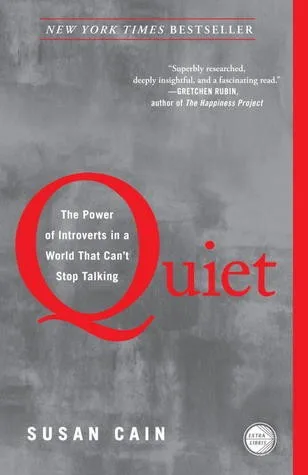
There is a pleasing irony in the fact that Quiet, a book arguing that introverts are undervalued in a culture that worships the loud, is narrated so well by someone quiet. Kathe Mazur's reading won a place on multiple best-audiobook-of-the-year lists, and it is a masterclass in how a calm, unshowy voice can be more compelling than a dramatic one, exactly the thesis of the book she is reading.
Western culture, Cain argues, has organized itself around an "Extrovert Ideal", the assumption that the ideal person is gregarious, comfortable in the spotlight, quick to speak. This bias is baked into our schools, our open-plan offices, our leadership models. But a third to a half of people are introverts, and introversion (which Cain carefully distinguishes from shyness) comes with real strengths: deeper focus, more careful decision-making, better listening, and a different but equally effective style of leadership. The book blends psychology, neuroscience, and cultural history, and its case studies, from Rosa Parks to Harvard Business School to a Tony Robbins seminar Cain attends as a self-described fish out of water, are consistently illuminating.
Mazur has a lovely, reflective, calming voice, and the production wisely lets her stay understated. She is friendly and engaging without ever pushing, and her dry humor lands beautifully in the observational passages, particularly Cain's discomfort at high-energy self-help events. For a book that celebrates the quiet strengths, having a narrator who embodies them rather than performing against them is exactly right. At ten and a half hours, her steady pacing makes the book's more research-dense passages feel light.
Introverts, obviously, for whom this book is often a genuinely validating experience, many report it reframing their entire self-understanding. But arguably the more important audience is extroverts: parents of quiet children, managers of quiet employees, teachers. The book is a plea for understanding across a temperamental divide, and it makes its case with warmth rather than grievance. It pairs naturally with Thinking, Fast and Slow for the cognitive-science underpinnings of how different minds process the world.
Well narrated? Award-winningly so, Mazur's quiet strength proves the book's own point. One of the most validating listens in the psychology category, and a rare case where the narrator's restraint is itself part of the argument.
Thinking, Fast and Slow for the science of how minds differ, or The Power of Now for the case that the quiet interior is where life actually happens.
Kathe Mazur narrates the Penguin Audio edition, and her performance was named a Best Audiobook of 2012 by AudioFile magazine and Audible. Her calm, reflective delivery is widely praised as a perfect match for the book's subject.
Arguably even more so. The book is largely a plea for extroverts, especially parents, teachers, and managers, to understand and make room for introverts. Many extroverted listeners report it changing how they run meetings, classrooms, and households.
Cain is careful on this: shyness is fear of social judgment, while introversion is simply a preference for lower-stimulation environments. An introvert is not necessarily shy, and the book spends real time untangling the two, which is one of its most useful contributions.
About 10 hours 39 minutes, a substantial but very listenable listen, and Mazur's steady pacing keeps the research-heavy sections moving.
You can hear Quiet free with an Audible trial. (Affiliate link, we may earn a commission at no extra cost to you.)
No approved reviews yet. Be the first to write one.