 🎧
🎧
Fiction
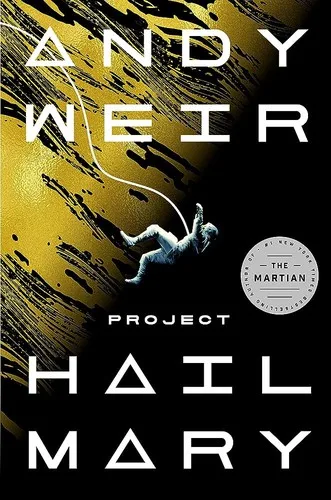
Project Hail Mary
6 reviews
View →
Narration ★5

Affiliate link — we may earn a commission at no extra cost to you.
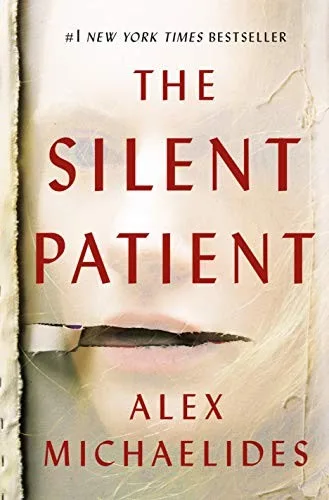
A woman shoots her husband five times and never speaks another word. The premise sells itself — and the audiobook production understands that the novel's dual structure is a gift to the format, casting two narrators whose alternation becomes part of the machinery of one of the decade's most discussed twists.
Alicia Berenson, a celebrated painter, is found beside her husband's body and retreats into total silence, communicating only once — through a painting titled Alcestis. Years later, Theo Faber, a criminal psychotherapist with an unusual fixation on her case, maneuvers his way into the secure unit where she is held, determined to make her speak. The novel alternates between Theo's first-person account of the treatment and Alicia's diary from the weeks before the murder — two clocks ticking toward each other, which is exactly where the audio casting earns its keep.
Jack Hawkins reads Theo with a controlled, clinical warmth that the story gradually complicates — a performance you will want to think about again after the final chapters. Louise Brealey (familiar to Sherlock viewers) reads Alicia's diary with a raw, close-mic intimacy that makes the silent woman the loudest presence in the book. The alternation does real narrative work: your ear tracks the two timelines effortlessly, and the production's restraint — no music, no effects, just two well-directed voices — keeps the focus on the trap being assembled. When the twist arrives, part of its impact lands through the narration itself, in a way print cannot quite duplicate.
Between the diary entries and the therapy sessions, the mid-section idles deliberately — thriller listeners raised on chapter-end cliffhangers may find the pace literary. Trust it; the slow middle is load-bearing. Content notes: suicide, self-harm, and psychiatric-ward settings feature throughout.
Well narrated? Yes — a dual performance that is functionally part of the plot. One of the rare twist-thrillers that is arguably better in audio than in print.
Where the Crawdads Sing — a very different mystery, but the same lesson in how narration builds atmosphere print only implies.
Jack Hawkins voices therapist Theo Faber and Louise Brealey reads Alicia's diary entries in the Macmillan Audio edition — a dual casting widely praised for sharpening the novel's twin-timeline structure.
It is the novel's reputation for a reason — fairly planted, genuinely surprising to most readers, and structurally clever rather than random. Even listeners who guess the direction rarely guess the mechanism.
It is psychologically heavy rather than gory — the violence is mostly off-page, but themes of suicide, trauma, and institutionalization run throughout. Listeners sensitive to those areas should approach with care.
You can hear The Silent Patient free with an Audible trial. (Affiliate link — we may earn a commission at no extra cost to you.)
No approved reviews yet. Be the first to write one.